

Why Data Disclosure Is the Engine of Freight Decarbonization
The freight and logistics sector sits at a crossroads. Climate commitments are multiplying, regulatory pressure is mounting, and supply chains are under a microscope like never before. Yet for all the ambition, one foundational challenge persists: we cannot decarbonize what we cannot measure.
Smart Freight Centre set out to understand exactly where the sector stands, analyzing disclosure data from CDP, the world’s environmental disclosure system through which over 22,100 companies reported in 2025. What emerged is a three-part portrait of an industry in transition; one where transparency is rising, but the gaps are still wide enough to demand urgent action.
This analysis has been powered by CDP data as part of SFC and CDP’s mission to enhance transparency and drive action in the transport sector.
Part 1: The Data Gap Is Real and It Has Consequences
More than 22,100 companies globally disclosed their data through CDP in 2025. That is a remarkable act of collective transparency. But when you look closer at transportation emissions specifically, the picture becomes more revealing.
Transportation companies make up just 4% of CDP reporting companies, yet they account for 7% of all Scope 1 emissions recorded. Of the roughly 500 transportation asset-owning companies in the dataset, only 273 (just 55%) reported their Scope 1 emissions. And from the full pool of 12,000 disclosers, only 5,542 companies, a mere 46%, reported Scope 3 transportation emissions at all.
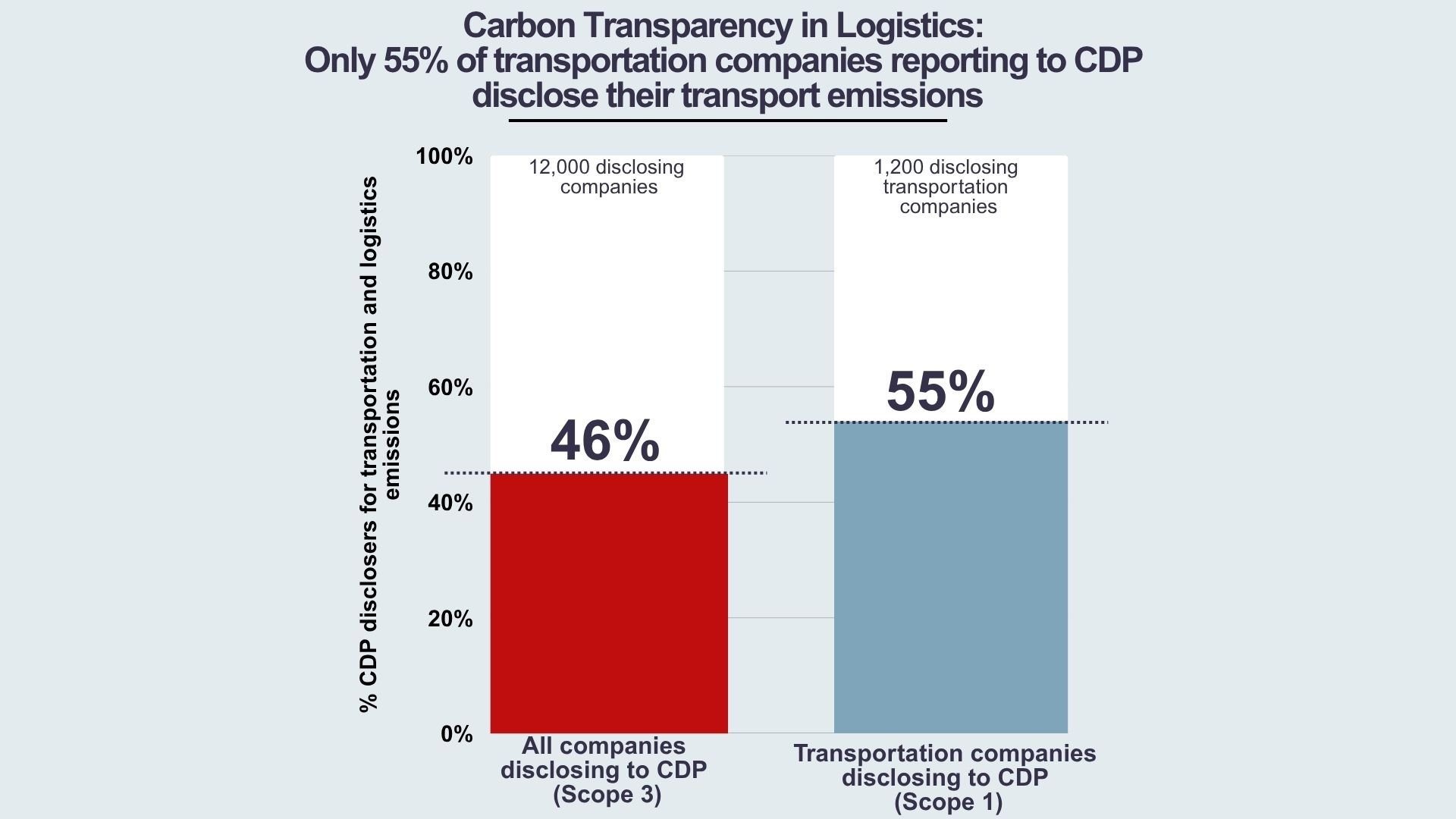
Without emissions data from carriers and logistics service providers, shippers cannot build accurate Scope 3 footprints, and without those, decarbonization targets have no solid ground to stand on.
The scale of the challenge becomes even clearer when you look at which sectors are driving Scope 3 transportation emissions. The materials sector lead at 26%, followed by Transportation services (i.e LSPs) themselves at 16%, and Food, Beverage & Agriculture and Manufacturing both at 15%. But transportation emissions are not only a concern for the obvious heavy hitters. On average, logistics represents 22% of Apparel companies' Scope 3 footprint, and 14% for both retail and the food, beverage and agricultural sectors. No sector is exempt.
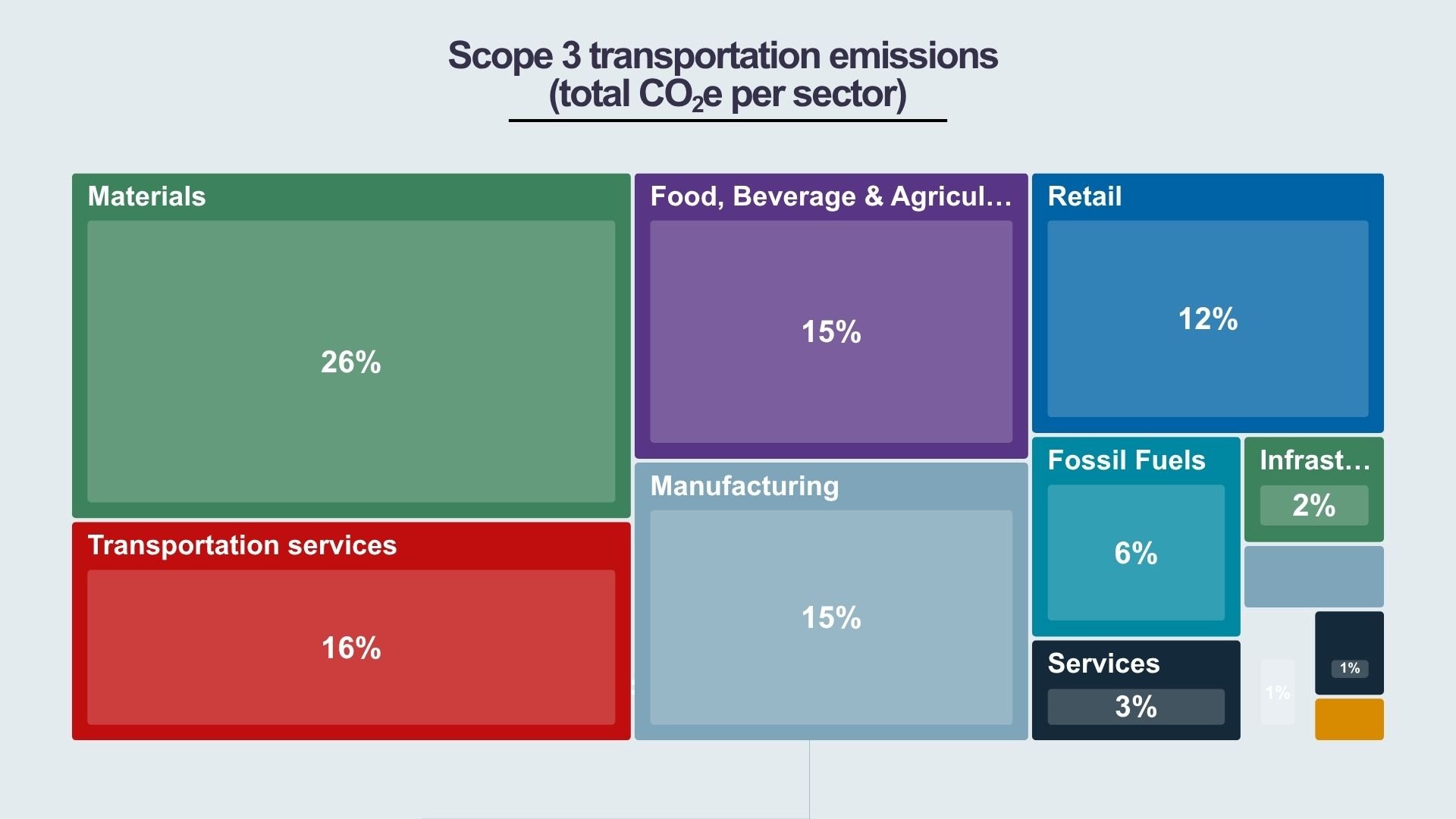
The message is clear: freight emissions are everyone's problem, and disclosure is the first step toward making them everyone's responsibility.
Part 2: Collective Action Is Closing the Gap
Data does not materialize in isolation. It is built through relationships, commitments, and a culture of transparency. And the Smart Freight Centre community is proof that collective action works.
Of SFC's membership, 117 companies currently report to CDP. Shippers are leading the charge, nearly 90% of SFC shippers disclose their emissions, compared to 50% of carriers and 40% of logistics service providers. These figures reveal both the progress made and the work that remains: carriers and LSPs hold the primary operational data that shippers urgently need, and closing this gap requires them to step forward too.
Collaboration is key to fight climate change, by joining forces with the most widely recognized and used disclosure standard for environmental impacts, we will align emission reporting requirements and jointly enhance transparency in emission reduction efforts across the transport and logistics sector.
Christoph Wolff
CEO, Smart Freight Centre
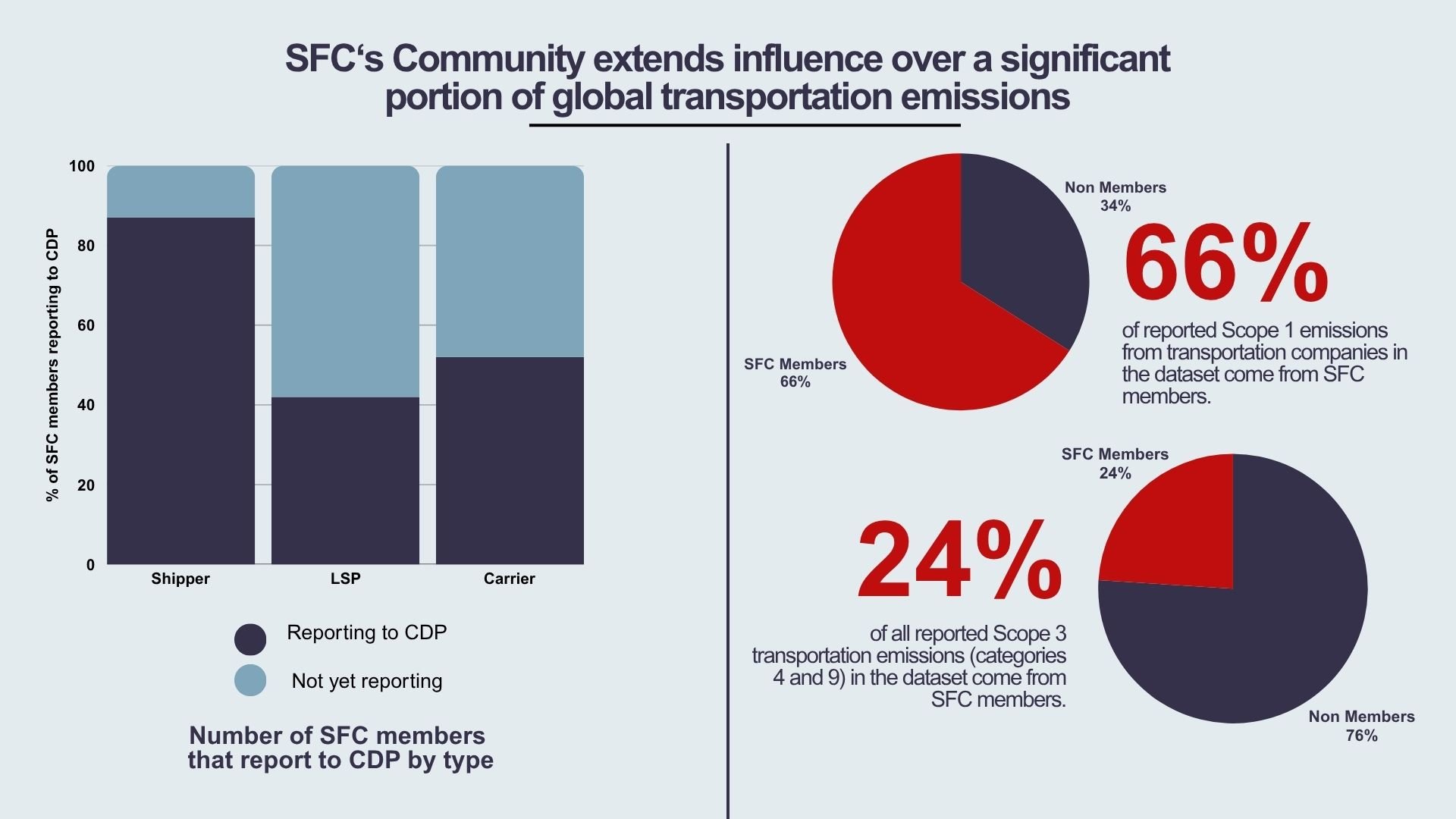
The influence of the SFC community extends well beyond its membership count. SFC members account for 66% of all reported Scope 1 emissions from transportation companies in the dataset, and 24% of all Scope 3 transportation emissions (categories 4 and 9). This is a community that is not just talking about decarbonization — it is literally shaping global freight emissions.
Perhaps most significantly, the depth of commitment within the SFC community stands apart from other disclosers. Nearly all SFC members actively participate in collaborative sustainability initiatives, compared to just 68% of all CDP disclosers. And SFC members are twice as likely to hold a validated Science Based Target than non-members. Of the SFC membership, 65 companies have validated SBTi targets, with a further 5 having formally committed to setting them.
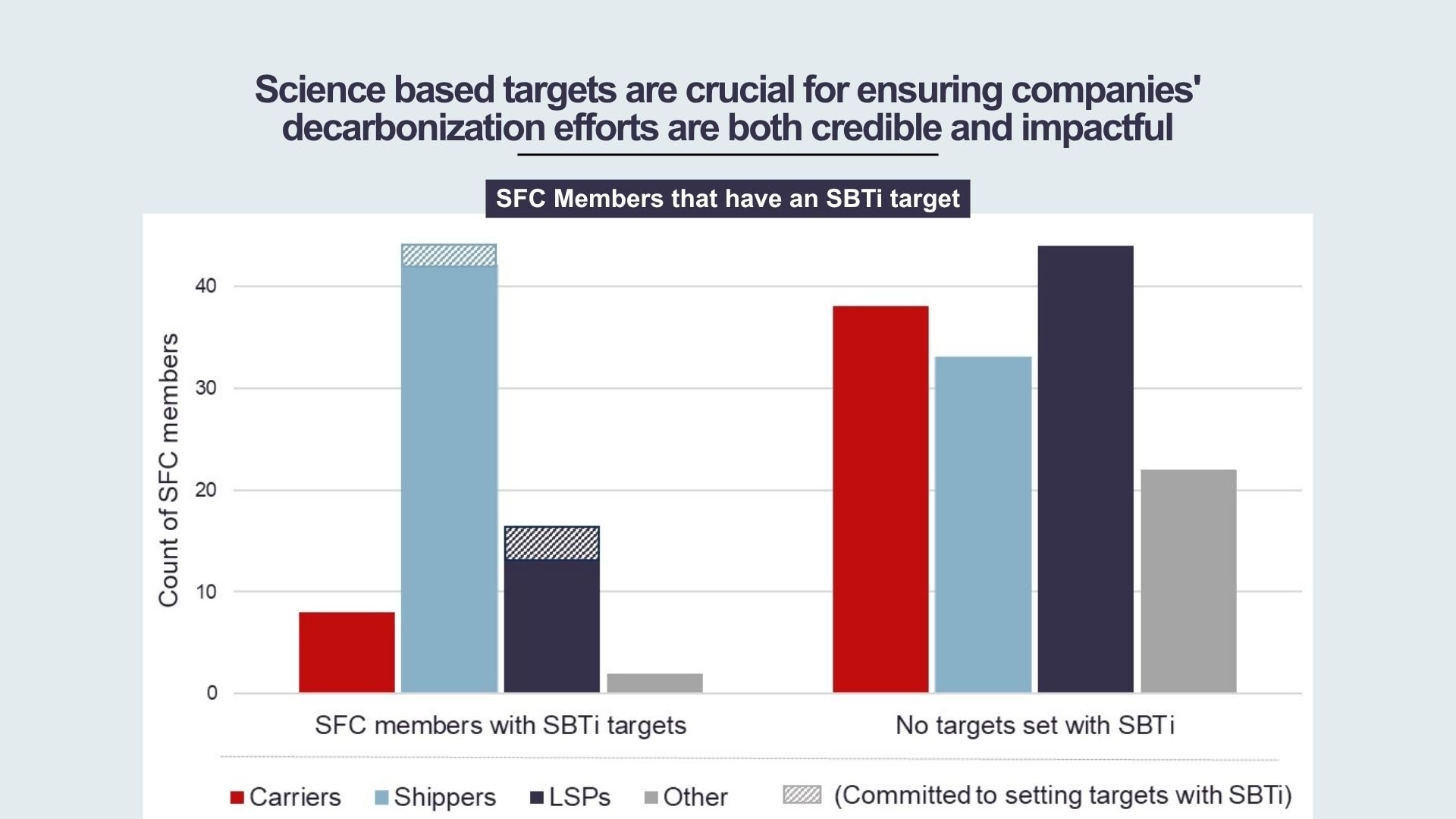
The pattern is consistent: companies that engage collectively raise their own standards. Membership in a community of practice does not just signal ambition, it drives it.
Part 3: Methodology Matters: How You Calculate Emissions Is As Important As Whether You Do
Even among companies that do disclose, not all disclosures are created equal. The methodology behind an emissions figure determines whether it can be trusted, compared, and acted upon. And the data reveals a stark divide.
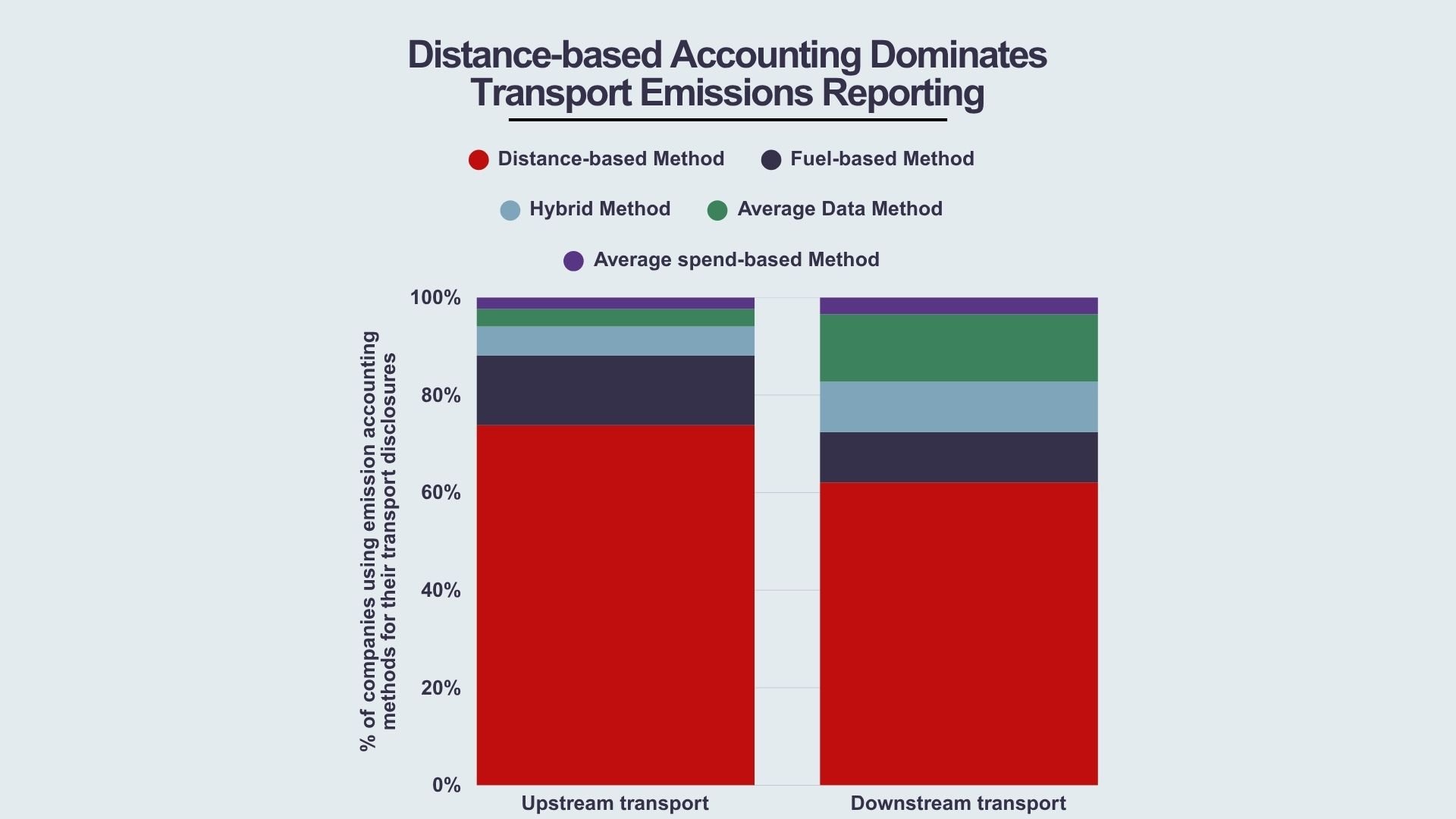
The majority of companies still rely on distance-based methods for calculating transport emissions — a simplified approach that trades accuracy for ease. Fuel-based methods, which produce more precise figures, are more commonly used for upstream emissions accounting, but remain less prevalent for downstream reporting.
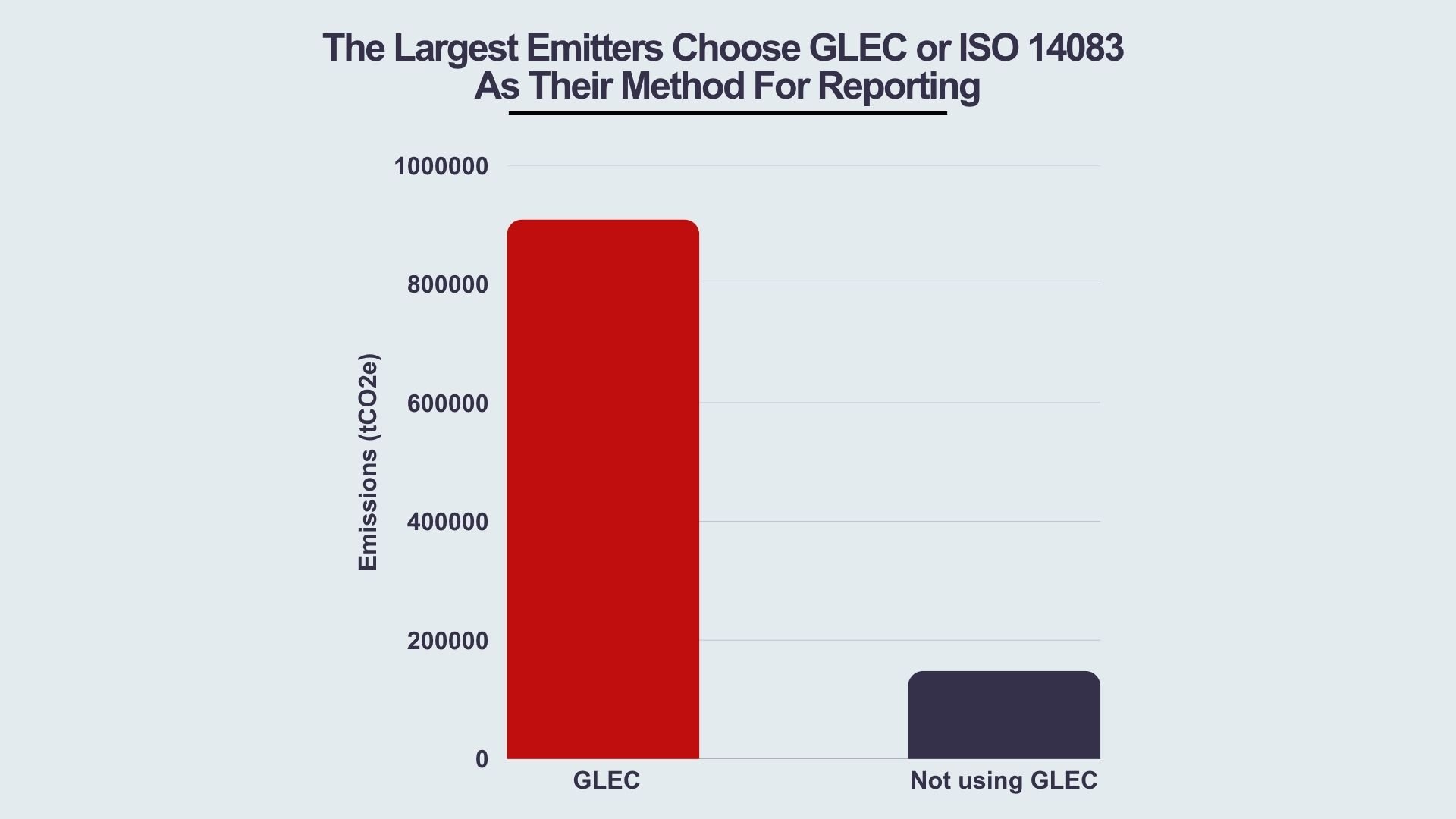
The GLEC Framework and ISO 14083 represent the gold standard for logistics emissions calculation. They create a shared, globally recognized methodology that makes emissions figures comparable, credible, and actionable. And the companies using them are telling:those disclosing upstream Scope 3.4 emissions using GLEC or ISO 14083 report average emissions of nearly 1 million tonnes of CO2e — far exceeding the figures reported by companies using other methods. This shows the largest, most sophisticated emitters are using the most rigorous tools.
Primary data is also on the rise, driven by growing trust between supply chain partners. Among 3,840 companies reporting to CDP, 36% of upstream (Scope 3.4) and 33% of downstream (Scope 3.9) logistics emissions are now calculated using primary data gathered directly from value chain partners. Shippers and carriers are sharing operational data more openly, and as that trust deepens, accuracy follows.
The takeaway is not just to disclose; it is to disclose well. Be transparent about your methodology. Adopt the GLEC Framework and adhere to ISO 14083. Prioritize primary data exchange with your partners. That is how the sector moves from approximate to accountable.
Disclosure Is a Foundation to Build On
Three parts. Three lenses on the same challenge. And one consistent conclusion running through all of them: credible data is the bedrock of credible decarbonization.
The freight sector cannot afford to leave its emissions unreported, to rely on simplified methodologies when rigorous ones exist, or to treat disclosure as an annual compliance exercise rather than a strategic tool. The companies leading the way, those using GLEC, sharing primary data, setting science-based targets, and disclosing to CDP, are not just doing it for optics. They are building the infrastructure of accountability that the entire sector needs.
Over 73,000 companies are being requested to disclose through CDP’s disclosure system in 2026. They have been hand-picked by their buyers and are used by financial institutions who understand the clear benefits of having access to consistent, comparable and standardized data. This mechanism allows for better procurement decisions and greener financial flows. Get started today on that request and get one step ahead of your peers on your decarbonization journey
Ariane Coulombe
Market Director for EMEA at CDP
If you have not yet disclosed your freight emissions through CDP, now is the time. If you are disclosing but relying on estimated or secondary data, now is the time to push for primary data exchange with your value chain partners. And if you are already doing all of that, you are helping build the insights the sector needs to move faster and go further.
Your data matters.
This series was brought to life by a dedicated team whose analytical rigor and collaborative spirit made it possible. Rebecca Powell, Violetta Matzoros, Margarita Georgiadou, Angelica Saglimbeni and Aditya Verma.
Disclosure: This analysis is based on data submitted through the CDP corporate questionnaire, reflecting voluntarily reported emissions from participating organizations. It does not represent a complete accounting of global transportation and logistics emissions. Data is self-reported; SFC has screened results to reduce obvious inaccuracies but has not independently verified submissions.
The data submitted to CDP in the most recent disclosure cycle by all companies that have agreed to their data being made publicly available in response to CDP's Investor and Supply Chain Questionnaire Climate Change Theme Only) and held on the CDP database but excluding any attachments, or the corresponding most recent Data available in each Term or Renewal Term;
